Showing posts with label climate change. Show all posts

Sunday, 29 November 2009

Global Warming - The Solution (Part 1).

Firstly apologies for the long gap since my least blog. Unfortunately the real world occasionally intervenes and drags me away. There have been so many things to blog about too, what with Bristol City Council's capitulation to 'business-as-usual-only-more-so-and-stuff-the-environment' with their decision to pursue the football World Cup bid. That I will hopefully come back to anon, but with Copenhagen fast approaching it seems timely to launch my own modestly titled 'Solution to Global Warming'.

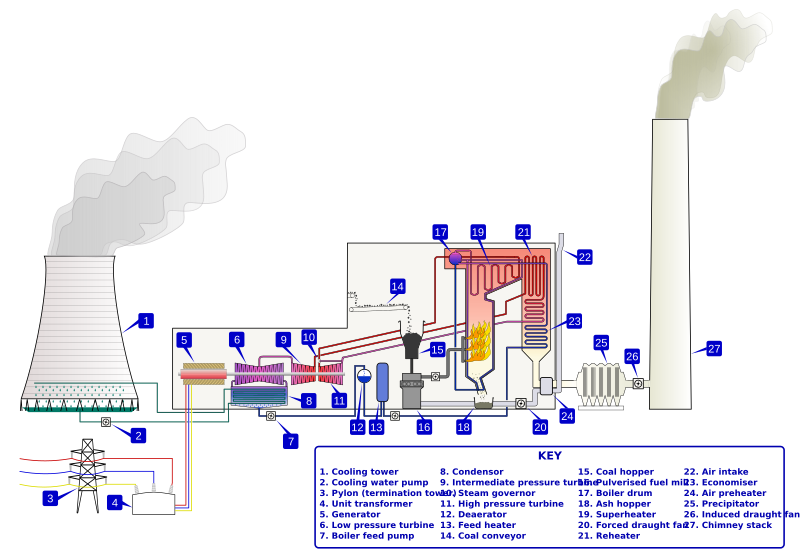
Obligatory smoking chimney pic

Let me say at the outset that I'm not the only person proposing this kind of approach and I'm not claiming it as some great leap in thinking. It is merely the simple application of free market principles (no, that's not an oxymoron) to the problem, an application of the 'polluter pays' principle and an example of an ecotax. It's simple in essence so easily understood by the consumer but would allow for the evolution of sophistication, entreprise and diversity in it's implementation (which I'll describe in Part 2). What's most important, in contrast to Cap-and-Trade, it would actually work.

The essence of the system is that the consumer of goods or services should pay for the environmental costs arising from the supply of those goods or services, including of course the cost of carbon dioxide and other greenhouse gases. In the case of carbon dioxide the cost would be what it actually costs to neutralise or fully mitigate the environmental impact. So far so familiar. But then the final element is where it gets interesting. The environmental costs paid by the consumer must be used to pay for (and will be determined by) the environmental neutralisation or mitigation so that the impact really is neutralised/mitigated.

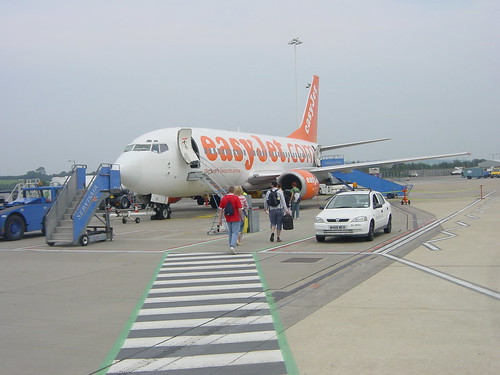
I'll describe the mechanism for doing this in some detail in Part 2 in due course but let's first consider how such a system would work in principle. Say Mr Consumer wants to travel to exotic climes. He looks at air fares, but finds that the incorporation of the environmental costs makes air travel much more expensive. He then has three choices.
  1. Pay the higher air fare and fly (in which case his environmental impact will be neutralised/mitigated so no problem).
  2. Travel by some other means and/or a shorter distance with a lower environmental impact and pay the lower environmental costs (in which case no problem)
  3. Not travel (in which case no problem).
Freedom of choice but with responsibility. The same would apply to every single item of consumption because every good or service would incorporate its environmental costs. Even a cup of coffee or a hamburger would be more expensive precisely in proportion to its total environmental impact. So we would all inevitably adjust our spending to favour options with low environmental impacts and eschew options with high environmental impacts. We would find all energy costs much higher so we would need to travel less and invest in much better home insulation, meat and dairy products would be more expensive and vegetarian options less so and so on through the whole gamut of modern consumption.


Nobody would be denied the theoretical choice of flying, or driving an inefficient car, or whatever, but since such options would become so much more expensive only the relatively wealthy will have the practical means to choose (which is already true for most of the world's population anyway). The consequence would be a big shift in consumption patterns and the demise of many contemporary business models, notably those predicated on cheap air travel like, er, the World Cup (good choice Bristol City Council). Businesses would have to adapt and quickly to survive and prosper.

So problem solved? All the world's nations have to do in Copenhagen is agree to adopt such a system in good time and we can all forget about the worst of the Global Warming scenarios (unless it's already too late, in which case we can worry about our future survival instead on how to avoid Climate Change)? But of course they won't for the very simple reason that it would actually work. That is the last thing that powerful business interests want. Better for them to carry on with failing policies like Cap-and-Trade than adopt a policy that will actually work.

Tuesday, 4 August 2009

Greenwash Corner

Some of us were hoping that Bristol's richly deserved failure to be awarded European Green Capital status back in February might have dampened their spirits somewhat, but it seems that the Green Capital crap is still being peddled.


Over on the Bristol Streets site, which masquerades as a wholly independent site but is in reality a mouthpiece for pro council propaganda and to which council officers appear to have privileged access, we find a puff piece entitled "Bristol Still Green Even if not Green Capital", which includes the claim that -
"The competition has reaffirmed Bristol’s Green Capital commitment to be seen as the leading city in Europe for the quality of its environment and in the way it is tackling climate change."
Oh really? Losing has reaffirmed? I suppose that's what you call looking on the bright side (something I have to admit I'm not familiar with). But if Bristol's strengths are the way it is tackling climate change and the quality of its environment (stuff like transport and noise?), how come it lost? The same paragraph answers our question-
"It (the competition) has also given a clear indication of the priority areas of action needed to be addressed; these are climate change, transport and noise."

Wednesday, 1 April 2009

Airport Expansion under the Spotlight

At last night's full Council meeting of Bristol City Council the following motion, tabled by Bristol's only Green Councillor Charlie Bolton, was debated.
This Council does not believe that expansion of Bristol International Airport is necessary for the economic success of Bristol, nor does it believe it is compatible with the target of 80% cuts in greenhouse gas emissions introduced by the Climate Change Act 2008.....

As expected the motion was supported by the Lib-Dems but then defeated by a Labour 'wrecking amendment' which was voted through with Conservative support. A familiar pattern, mirroring the events of exactly one year ago when Charlie's motion to 'save the Railway Path' was supported by the Lib-Dems and then defeated by a Labour wrecking amendment supported by the Tories.

However these debates are by no means a waste of time. On each occasion the overall agenda moves forward a few more inches. The Green Party position gains credibility, the Lib-Dems move towards a greener agenda, the Labour Party are exposed as fundamentally anti-environmental (clumsy word that) and the Conservatives are shown to be largely bereft of environmental awareness despite Cameron's efforts.


Whether such inching forward will lead us to a sustainable model of social and economic organisation in time to avert the worst effects of Climate Change is doubtful, but change for the most part consists of such modest adjustments. We either support it, ignore it or oppose it. So let's give credit to those who have supported change in this case, to Charlie Bolton for tabling the motion and to the Lib-Dems for supporting it.

I was planning to continue this post with an exploration of the issues, but they are too complex to be touched on lightly. Don't underestimate the difficulty of this issue for politicians, especially those appealing for support from a broader constituency than the Green Party. Few of us have not taken advantage of the opportunities for cheap and fast travel afforded by Bristol Airport and many of us regard it as our gateway to the wider world. The contradictions with sustainability cannot any longer be brushed aside.

Thursday, 7 August 2008

Is the government throwing in the towel on global warming?

Today's Guardian reports that the government's chief scientific adviser Professor Bob Watson is warning that we should prepare for a 4°C temperature rise. The government also look set to give approval for new coal fired power stations (Monbiot.com) without any guarantee that Carbon Capture and Storage (CCS) will be applied. These are just the latest signs that government's stated aim to limit carbon emissions and global warming is falling apart.

A 4°c rise in global temperatures would be catastrophic, with perhaps hundreds of millions of people affected by coastal flooding, severe drought in Africa and the Mediterranean and the extinction of 50% of animal and plant species. Such a temperature rise might well trigger other changes, such as the release of methane hydrate deposits in the Arctic, which would then lead to even greater global warming.

Future generations, if there are any, will look back in utter amazement that we allowed this to happen when we had the knowledge of what was happening and the means to do something about it. We might well look around ourselves now and ask "how are we allowing this to happen?" It's not just about such blatant greenwash as Bristol International Airport's proposed wind turbine. The mechanism of failure embraces almost everything that is currently being done in the name of reducing carbon emissions.

So what can we do? It's easy to feel that there's little that one can do as an individual, but if individuals do nothing then there is really no hope. Yet it's not enough to modify our own lives to have a smaller carbon footprint in splendid isolation from the real world. Such pretensions merely pave the road to Hell. We must somehow engage with the wider debate to make government realise that more and more people are demanding real action on this issue. This blog is my little drop in the ocean swell of public opinion that is needed to avoid this catastrophe. What's yours?