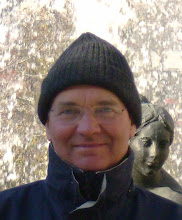
Tonight (but see PS below) I get my 15 seconds or so of fame in a TV programme, Inside Out, going out at 7.30 pm on BBC 1. My brief appearance will be part of a 10 minute slot on Cycling City, also featuring Cllr Jon Rogers and a few other local cycling savants. Basically Jon will be seen shivering out on the St Werburgh's path being upbeat and positive while I will be seen shivering on Hartcliffe Way being critical and negative. We were both interviewed (separately) for about an hour or so, but little of what was said will find its way into the programme, perhaps just a few sound bites to fit the narrative.
One sound bite that I'm sure will be used is when I am asked if Cycling City is succeeding or failing and I reply....well, you guess. So why is it failing? Well in the first place it set itself hopelessly unrealistic targets, especially doubling the number of cyclists within the three years, and so by its own criteria it's bound to fail. If it was merely a question of setting over ambitious targets Cycling City might be forgiven - we've all been there. But the problems are more fundamental than that.
I blogged about these fundamental problems on many occasions but in essence in comes down to a lack of honesty and openness which we can trace back a very long way, through the previous Labour administration of Bristol City Council to Cycling England and Sustrans. All subscribe to the idea that you can and should spin a story even if it has little substance to back it up. The Sustrans National Cycle Network was an outstanding example of this and it was a remarkably successful sleight-of-hand since no one was really in a position to go and comprehensively check on what really existed, before and after NCN, on the ground.
But in Bristol it's different. It is possible for one person to explore all the existing and proposed cycle network and see exactly how existing routes are being presented as new ones (e.g. Hartcliffe Way above). But having based the Cycling City strategy on this deceit it's very difficult for the Council to back out of it - what would be left to give credibility to Cycling City? As it happens the more intangible aspects of Cycling City, like the publicity generated, may well prove to be the more significant in terms of encouraging cycling, but people expect to see physical changes on the ground and they are difficult to deliver, especially within such a short time scale.
PS. Having just posted this, I now hear that this Inside Out feature may be postponed and replaced with a 'snow' special. I'll update if I hear anything more definite.
PPS. Yep, it's confirmed that the Cycling City feature will now go out next Monday instead.
Showing posts with label sustrans. Show all posts
Monday, 11 January 2010
Sunday, 10 January 2010
Slippery Sustrans
Bristol is home to "the UK's leading sustainable transport charity", Sustrans, who have their national head quarters down in Trinity Street, next door to the Cathedral and conveniently within spitting distance of the Council House. Sustainable transport of course means above all cycling and walking, so it is perhaps instructive to note their own efforts to clear the well used walking route outside their offices (the white facade below).
That's strange, even by 4 p.m. on Wednesday 6th Jan (above) no one in "the UK's leading leading sustainable transport charity" seems to have bothered to clear the pavement outside. Perhaps they were short staffed that day, what with the snow problems. Surely by Friday 8th (below) someone will have noticed that the pavement outside is in need of clearing, or are they all too busy designing glossy brochures and flashy websites to notice what is going on outside in the real world?
Tuesday, 15 September 2009
Adios Josh Hart
Another valedictory, this time to Josh Hart who is about to leave our little island for his hometown of San Francisco, travelling entirely by surface public transport as a gesture against the hegemony of the plane and car. His arrival from San Francisco some three years ago by the same means made quite a splash with the media. But he had serious work to do at UWE and undertook valuable research replicating an earlier study (coincidentally carried out by an Englishman, Appleyard, in San Francisco 40 years ago) into the deleterious effect of high traffic levels on social contact between neighbours.

As well as undertaking the two year UWE course Josh has been very active in local and national environmental campaigns (as a google search will confirm), has maintained an excellent blog, On the Level, and has helped revitalise the Bristol Cycling Campaign. He has impressed us all with his typically American 'can do' attitude and has been inspirational as a public speaker, which he demonstrated again last Friday with his speakers' corner spot at the Arnolfini (above) and on many occasions when addressing politicians and local government officers, as in this video.
We hope to see him again in Bristol before too long, but who knows. It's not easy being committed to change and uncompromising in working for it. He has just completed a stint with Living Streets (formerly the Pedestrians Association) where he has done much to promote local groups but has clearly found it difficult to accept the 'don't bite the hand that feeds' culture of an organisation that seems to have been 'Sustrans-ised', abandoning cutting-edge campaigning for more lucrative work as in effect a government agency.
We can at least be confident that Josh will continue to make a big impact where ever he goes, an animated voice in defence of both the delicate environmental systems that underpin our survival and the weakest members of society. We all wish him well and will be following his exploits with interest via his blog which he has promised to continue.

As well as undertaking the two year UWE course Josh has been very active in local and national environmental campaigns (as a google search will confirm), has maintained an excellent blog, On the Level, and has helped revitalise the Bristol Cycling Campaign. He has impressed us all with his typically American 'can do' attitude and has been inspirational as a public speaker, which he demonstrated again last Friday with his speakers' corner spot at the Arnolfini (above) and on many occasions when addressing politicians and local government officers, as in this video.
We hope to see him again in Bristol before too long, but who knows. It's not easy being committed to change and uncompromising in working for it. He has just completed a stint with Living Streets (formerly the Pedestrians Association) where he has done much to promote local groups but has clearly found it difficult to accept the 'don't bite the hand that feeds' culture of an organisation that seems to have been 'Sustrans-ised', abandoning cutting-edge campaigning for more lucrative work as in effect a government agency.
We can at least be confident that Josh will continue to make a big impact where ever he goes, an animated voice in defence of both the delicate environmental systems that underpin our survival and the weakest members of society. We all wish him well and will be following his exploits with interest via his blog which he has promised to continue.
Labels:
bristol,
bristol traffic,
josh hart,
living streets,
pedestrians association,
sustrans,
UWE
Saturday, 15 August 2009
Another Ghost Bike for Bristol
We now have details of the cyclist killed on Tuesday as a result of a collision with a van at the junction of Winterstoke Road with Brunel Way (below). He was 52 year old Bristol University professor Stephen Morris from Backwell. The Evening Post report gives us some idea of the tragic consequences of such an untimely death on the victims family, friends and work colleagues, especially close family members who suddenly find themselves without a partner or father.
View Cycle and ped injury incidents in a larger map
This is the second cyclist death in Bristol this year and there have been others on the urban fringe beyond the Council's boundaries including one on this same road (A370) at the other end of the Long Ashton bypass last December. We should not of course speculate about the causes of this collision and consequent death when so little information is available to us. However it is I think appropriate, while minds are focused on this tragic event, to note certain circumstances which may or may not turn out to be contributory factors.

The most obvious point to note is that, in common with the most other cyclist deaths, this occurred on a road with a higher speed limit than 30mph, in this case 40mph. In practice that means that speeds significantly above 40 mph are normal and largely tolerated by the authorities. Such speeds are simply incompatible with safe cycling. Where cyclists have no practical alternative but to share such roads a 30 mph limit would be more appropriate and might possibly have avoided this latest tragic death.
Sustrans have cobbled together some plans for a convoluted alternative cycle route which is now being developed by Cycling City but the route proposed will be of little use to utility cyclists and commuters who want to follow a fairly direct and fast route. So let's not accept for one minute that Sustrans type 'recreational' routes are any sort of solution to the problem of excessive speeds on main roads. Besides we've already waited 30 years for new infrastructure and the highway engineers have consistently failed us. We need determined action on excessive speeds now before more cyclists are killed. Two Ghost Bikes in Cycling City are enough.

Tribute to Nick Abraham, 29, killed by a motorist while cycling on the Portway in January this year.
View Cycle and ped injury incidents in a larger map
This is the second cyclist death in Bristol this year and there have been others on the urban fringe beyond the Council's boundaries including one on this same road (A370) at the other end of the Long Ashton bypass last December. We should not of course speculate about the causes of this collision and consequent death when so little information is available to us. However it is I think appropriate, while minds are focused on this tragic event, to note certain circumstances which may or may not turn out to be contributory factors.

The most obvious point to note is that, in common with the most other cyclist deaths, this occurred on a road with a higher speed limit than 30mph, in this case 40mph. In practice that means that speeds significantly above 40 mph are normal and largely tolerated by the authorities. Such speeds are simply incompatible with safe cycling. Where cyclists have no practical alternative but to share such roads a 30 mph limit would be more appropriate and might possibly have avoided this latest tragic death.
Sustrans have cobbled together some plans for a convoluted alternative cycle route which is now being developed by Cycling City but the route proposed will be of little use to utility cyclists and commuters who want to follow a fairly direct and fast route. So let's not accept for one minute that Sustrans type 'recreational' routes are any sort of solution to the problem of excessive speeds on main roads. Besides we've already waited 30 years for new infrastructure and the highway engineers have consistently failed us. We need determined action on excessive speeds now before more cyclists are killed. Two Ghost Bikes in Cycling City are enough.

Tribute to Nick Abraham, 29, killed by a motorist while cycling on the Portway in January this year.
Labels:
A370,
bristol,
Bristol university,
brunel way,
cycling city,
ghost bike,
speed limits,
Stephen Morris,
sustrans
Sunday, 19 April 2009
Cycling City - a Constructive Suggestion
Just for a change I'm going to try making some constructive suggestions for Cycling City, which by its own admission lacks the "wow" factor that is considered so essential in today's image obsessed world. It seems that for all the money being thrown at Cycling City and the elapse of over 9 months Bristol City Council still can't seem to find anyone with vision and imagination to work on the project. The best they seem to be able to manage is to recycle long established cycle routes as new ones on the basis of some minor improvements.
What the project needs is some infrastructure developments that create new links that make cyclists' journeys quicker, pleasanter and more convenient. So here is a first of what may be a series of constructive suggestions for such links. I'm not expecting to get any credit for this, even less any payment (I wouldn't want to deprive all those parasitic consultants of their life blood). I do it, against my better judgement, because I just can't suppress my innate enthusiasm for cycling.
View Ashton Gate routes in a larger map
Let's start with the Sustrans Connect2 project (now part of Cycling City and shown in yellow above), which seems to be bogged down in futile attempts to establish a new or improved crossing of the Docks Entrance Lock by Brunel's old swivel bridge, despite the fact that the alignment bears little relationship to the 'desire line' of the majority of potential users and seems to be founded as a John Grimshaw vanity project to link his name to that of Brunel, comparisons with whom he is rather fond.
The 'desire line' for a route from Ashton Court, Long Ashton and points west to the city centre is, like most desire lines, an approximation of a straight line. The route needs to cross the River Avon and then the Cumberland Basin to feed into Hotwells, Cliftonwood and north Harbourside. The River Avon crossing is long established via the old Ashton Avenue Bridge (pictured below) so the question is which end of the Cumberland Basin to cross - the west Entrance Lock end (Brunel's bridge) or the east Junction Lock end (Merchants Road)?

If you're not an employee of Sustrans or the City Council it won't be too difficult to see that the Junction Lock end gives a route that much more closely approximates a straight line than the Entrance Lock end. So what we need is a direct link from the Ashton Avenue bridge to the Junction Lock. Fortunately there is a section of disused railway passing under Cumberland Road that does precisely that, as shown above in red and pictured below. All that is then required is a section of contraflow cycle route on Merchants Road to link up to Clifton and away we go.

My direct route is less than half the distance of the Sustrans Connect2 route and avoids the expense of a new/upgraded crossing of the Entrance Lock gates, using instead the existing swing bridge which will need some traffic management to achieve an appropriate standard for cyclists and an improved traffic environment in the vicinity of the Nova Scotia and Avon Crescent by diverting through traffic onto the Brunel Way flyover system, where it should be.

The redundant railway route through to Avon Crescent
It seems such an obvious link to make, yet both Sustrans and the City Council have become fixated on getting a new link over the entrance lock by the Brunel bridge which offers little advantage for most cyclists. Even the small proportion heading for the Portway from Ashton Avenue Bridge will find the distance via the junction Lock crossing less than 200 metres longer, well under a minute of cycling. One has to ask why such a basic analysis of the options seems to be beyond the wit of the so-called professionals.
What the project needs is some infrastructure developments that create new links that make cyclists' journeys quicker, pleasanter and more convenient. So here is a first of what may be a series of constructive suggestions for such links. I'm not expecting to get any credit for this, even less any payment (I wouldn't want to deprive all those parasitic consultants of their life blood). I do it, against my better judgement, because I just can't suppress my innate enthusiasm for cycling.
View Ashton Gate routes in a larger map
Let's start with the Sustrans Connect2 project (now part of Cycling City and shown in yellow above), which seems to be bogged down in futile attempts to establish a new or improved crossing of the Docks Entrance Lock by Brunel's old swivel bridge, despite the fact that the alignment bears little relationship to the 'desire line' of the majority of potential users and seems to be founded as a John Grimshaw vanity project to link his name to that of Brunel, comparisons with whom he is rather fond.
The 'desire line' for a route from Ashton Court, Long Ashton and points west to the city centre is, like most desire lines, an approximation of a straight line. The route needs to cross the River Avon and then the Cumberland Basin to feed into Hotwells, Cliftonwood and north Harbourside. The River Avon crossing is long established via the old Ashton Avenue Bridge (pictured below) so the question is which end of the Cumberland Basin to cross - the west Entrance Lock end (Brunel's bridge) or the east Junction Lock end (Merchants Road)?

If you're not an employee of Sustrans or the City Council it won't be too difficult to see that the Junction Lock end gives a route that much more closely approximates a straight line than the Entrance Lock end. So what we need is a direct link from the Ashton Avenue bridge to the Junction Lock. Fortunately there is a section of disused railway passing under Cumberland Road that does precisely that, as shown above in red and pictured below. All that is then required is a section of contraflow cycle route on Merchants Road to link up to Clifton and away we go.

My direct route is less than half the distance of the Sustrans Connect2 route and avoids the expense of a new/upgraded crossing of the Entrance Lock gates, using instead the existing swing bridge which will need some traffic management to achieve an appropriate standard for cyclists and an improved traffic environment in the vicinity of the Nova Scotia and Avon Crescent by diverting through traffic onto the Brunel Way flyover system, where it should be.

The redundant railway route through to Avon Crescent
It seems such an obvious link to make, yet both Sustrans and the City Council have become fixated on getting a new link over the entrance lock by the Brunel bridge which offers little advantage for most cyclists. Even the small proportion heading for the Portway from Ashton Avenue Bridge will find the distance via the junction Lock crossing less than 200 metres longer, well under a minute of cycling. One has to ask why such a basic analysis of the options seems to be beyond the wit of the so-called professionals.
Wednesday, 1 April 2009
Salami Tactics Triumph

With yesterday's decision to grant Planning Permission to the redevelopment of the Chocolate Factory in Greenbank the long-running "Red Trousergate" saga appears to be drawing to a close, much to the relief of George Ferguson. All that remains is the decision by the Council to sell the "completely pointless" strip of Railway Path land to the developer, Squarepeg. Despite the expensive public consultation exercise which demonstrated popular opposition to the sale that decision to sell must now be a mere formality.
Geoge Ferguson - red trousered egotist?
So it is perhaps timely to recap and ask what lessons are to be learnt from this saga. The Railway Path through East Bristol occupies some prime development land, not only because the land is a linear strip suitable for transport uses. Even relatively small slices can be added to other adjacent land holdings to make sufficient space for a terrace of houses, as George Ferguson has so ably demonstrated.
Being George, he likes to make out that these narrow terraces are some new concept, but all he's done is copied what was done a few years earlier just up the road on the narrow strip between the Path and Greenbank Road. Only he took it a stage further by dispensing with the need to provide land for even the modest gardens of the Greenbank Road houses, using the Railway Path itself as a kind of communal garden instead.
So what was conceived by the desire to squeeze as much housing and car parking as possible into the margins of the site was subsequently born as "cycle houses", narrow and tall terraces with integral garages but without gardens, space for cars taking priority over space for people as ever. Even the the supposedly innovative idea of the houses facing two ways (a natural for George?) was borrowed from the 1960s Radburn housing of nearby Yate.
Insensitive development has already been allowed at other locations including Clay Bottom and Fishponds. More will be in the pipeline as pressure to urbanise every scrap of green space in our city increases. But the "cycle houses" up the ante since they give developers the pretext to encroach on the Railway Path in way that wouldn't otherwise have been feasible. Anywhere with road access on one side and the Path on the other is now vulnerable, even if the land in between is an embankment slope. There are many such locations in east Bristol.
Green space or development potential?
The lesson seems to be that the ever present threat to the integrity of the Railway Path can manifest itself as lots of small cuts, salami tactics, gradually urbanising the Path, subtly changing it from the linear country park that it is today. These threats need to be challenged just as energetically as the more obvious threats from grandiose rapid transit schemes. The present saga has shown very clearly that we cannot rely on the City Council or even quangos like Sustrans to protect the Path from such threats.
Friday, 27 March 2009
More Brunel Bungles
Bristol's Cycling City project seems to have an unlucky streak when it comes to trying to link schemes to our local engineering icon I K Brunel. Back in December this blog exposed the underhand attempt by the City Council and Sustrans to quietly drop their previous commitment to bring back into use Brunel's Swivel Bridge which lies forlornly under the shadow of the 1965 high-level swing bridge at the Cumberland Basin.

The story was picked up by the Evening Post, who reported the claim made by Sustrans' President John Grimshaw back in December 2007 that the use of Brunel's bridge would be "the icing on the cake" for the proposed cycle route. Grimshaw said "One key part will be the reinstatement of Brunel's so-called forgotten bridge". Then late last year the City Council apparently decided it was a daft idea after all and opted for a new crossing built on top of the existing lock gates (which may find English Heritage less than impressed).

So you would think the Council might tread warily in seeking to find some new pretext to associate this cycle route link with Brunel. But not so. Yesterday their latest proposals for the new link across the top of the lock gates were published, entitled the Brunel Lock Link, so named of course because it's a link designed to provide a new crossing of a lock built by, er, Thomas Howard.
Brunel did build a lock nearby, an upgrade of an earlier lock built by Jessop, but it proved inadequate and was abandoned in favour of Howard's new entrance lock, built in 1873 and used to this day. The abandoned lock is already crossed by a replica of Brunel's Swivel Bridge (foreground below) and the proposed cycle route will also use this crossing, but it still seems a rather tenuous connection with the Brunel name when the principal feature will be a crossing of the Howard Lock which signally fails to use Brunel's original Swivel Bridge.

The odd thing about this Sustrans / City Council obsession with establishing a Brunel themed link across Howard's Entrance Lock is that it actually fails to serve the main desire line for cyclists which will be towards the city centre, much better served by the swing bridge over the Junction Lock at the other end of the Cumberland Basin. If English Heritage cotton on to this they may be even more reluctant to agree to what would inevitably be a discordant addition to the historic lock structures.
The story was picked up by the Evening Post, who reported the claim made by Sustrans' President John Grimshaw back in December 2007 that the use of Brunel's bridge would be "the icing on the cake" for the proposed cycle route. Grimshaw said "One key part will be the reinstatement of Brunel's so-called forgotten bridge". Then late last year the City Council apparently decided it was a daft idea after all and opted for a new crossing built on top of the existing lock gates (which may find English Heritage less than impressed).
So you would think the Council might tread warily in seeking to find some new pretext to associate this cycle route link with Brunel. But not so. Yesterday their latest proposals for the new link across the top of the lock gates were published, entitled the Brunel Lock Link, so named of course because it's a link designed to provide a new crossing of a lock built by, er, Thomas Howard.
Brunel did build a lock nearby, an upgrade of an earlier lock built by Jessop, but it proved inadequate and was abandoned in favour of Howard's new entrance lock, built in 1873 and used to this day. The abandoned lock is already crossed by a replica of Brunel's Swivel Bridge (foreground below) and the proposed cycle route will also use this crossing, but it still seems a rather tenuous connection with the Brunel name when the principal feature will be a crossing of the Howard Lock which signally fails to use Brunel's original Swivel Bridge.
The odd thing about this Sustrans / City Council obsession with establishing a Brunel themed link across Howard's Entrance Lock is that it actually fails to serve the main desire line for cyclists which will be towards the city centre, much better served by the swing bridge over the Junction Lock at the other end of the Cumberland Basin. If English Heritage cotton on to this they may be even more reluctant to agree to what would inevitably be a discordant addition to the historic lock structures.
Friday, 6 March 2009
It's the Cycle Route wot gets it.
Anyone cycling around Bristol will have noticed that whenever any road works are carried out it's almost always the cycle route, track or lane that gets sacrificed to accommodate the works. Here's an example in Whitchurch Lane, south Bristol where a road widening scheme is underway to improve car access to the new development in Hengrove Park. In this case even the footway gets blocked off (with no alternative available), even on a Sunday when no work is taking place.

The Hengrove Park scheme includes a new cycle path to replace this cycle lane and is therefore receiving Cycling City funding, even though it was already planned and would have been carried out anyway, so in effect Cycling City funds are subsidising a road widening scheme. Some people think that's OK because there's a benefit to cycling, but does turning south Bristol into a mini Los Angeles with massive road schemes and huge scale development really benefit cycling?

If this cycle route is so important that it is designated as part of the new strategic multi-million pound Cycling City network, why do the authorities think it acceptable to deprive cyclists of what little comfort is afforded by the cycle lane during the road works? Could it be that there is negligible cycling demand on this route and it is being designated as part of Cycling City purely as a pretext for tapping into CC funds?

Hengrove Park was once the site of Bristol Airport (1930 - 1957) and is now looking rather forlorn, so some investment must be welcome, but does it need to be so resolutely car-orientated, with massive areas given over to car parking and access roads? Would it be asking too much for Hengrove Park to be developed as an exemplar of car-free living, given that it could be the focus for a lot of "alternative transport" investment with rapid transit and cycle routes, something worthy of Bristol's Green Capital aspirations?

Back to cycle route closures. Here's a recent example from nothing less than Sustran's National Cycle Route NCN 3, which runs form Bristol to Land's End, which was closed off next to Bristol Dog's Home beside the River Avon south of Temple Meads. The Closure signs didn't even acknowledge it as a cycle route! A diversion along the busy local road network was vaguely indicated.

In this case we find that the closure should only have taken place when works actually required it, yet it remained in place for weeks, including week-ends when absolutely no work was in progress. On one occasion when I visited, the works causing the Path to be closed consisted of two men in hi-viz jackets leaning against a fence (vaguely visible below - click pic to enlarge). Such is the priority accorded to users of the much vaunted National Cycle Network in our Cycling City.
The Hengrove Park scheme includes a new cycle path to replace this cycle lane and is therefore receiving Cycling City funding, even though it was already planned and would have been carried out anyway, so in effect Cycling City funds are subsidising a road widening scheme. Some people think that's OK because there's a benefit to cycling, but does turning south Bristol into a mini Los Angeles with massive road schemes and huge scale development really benefit cycling?
If this cycle route is so important that it is designated as part of the new strategic multi-million pound Cycling City network, why do the authorities think it acceptable to deprive cyclists of what little comfort is afforded by the cycle lane during the road works? Could it be that there is negligible cycling demand on this route and it is being designated as part of Cycling City purely as a pretext for tapping into CC funds?
Hengrove Park was once the site of Bristol Airport (1930 - 1957) and is now looking rather forlorn, so some investment must be welcome, but does it need to be so resolutely car-orientated, with massive areas given over to car parking and access roads? Would it be asking too much for Hengrove Park to be developed as an exemplar of car-free living, given that it could be the focus for a lot of "alternative transport" investment with rapid transit and cycle routes, something worthy of Bristol's Green Capital aspirations?
Back to cycle route closures. Here's a recent example from nothing less than Sustran's National Cycle Route NCN 3, which runs form Bristol to Land's End, which was closed off next to Bristol Dog's Home beside the River Avon south of Temple Meads. The Closure signs didn't even acknowledge it as a cycle route! A diversion along the busy local road network was vaguely indicated.
In this case we find that the closure should only have taken place when works actually required it, yet it remained in place for weeks, including week-ends when absolutely no work was in progress. On one occasion when I visited, the works causing the Path to be closed consisted of two men in hi-viz jackets leaning against a fence (vaguely visible below - click pic to enlarge). Such is the priority accorded to users of the much vaunted National Cycle Network in our Cycling City.
Thursday, 5 February 2009
Cycling City - Another Launch
In June last year Bristol was chosen by Cycling England, a government funded quango, to become England's first Cycling City, with an allocation of £11.4 million to be spent on cycling, this to be matched by local funding so making almost £23 million in total. Six months on and there is little enough to show for it. They have only just managed to appoint a Project Manager!

An abortive attempt in December to persecute cyclists for doing what motorists routinely do (ignore traffic regulations) merely succeeded in stirring up the latent animosity felt between rival road user groups. Then last month changes were made to Prince Street Bridge, ostensibly to benefit cyclists but actually creating what is in many ways a worse situation than existed before.
There has also been a great deal of controversy over the 'governance' arrangements, particularly the way that local cycle campaign groups, including people who have devoted decades of their lives to the promotion of cycling, have been excluded from the development of the Cycling City project. Even the CC web site appears to have been forgotten about.
So when things start looking flaky - time for a relaunch, taking place today with a promotion at the Royal Hotel on College Green (don't worry if you miss it, they'll be another one along in a few months). The relaunch appears to be focused on the publication of a new promotional leaflet which, along with the usual empty rhetoric, includes a map (below - click to enlarge) showing what infrastructure changes are proposed.

As you might expect I've one or two criticisms of Cycling City. I'll keep my powder dry on most of it for now, but let's take a closer look at that map. It purports to show "new infrastructure" and "new infrastructure on existing network". You and I might naively assume that "new infrastructure" was a new route that did not already exist (otherwise it would come in the second category, wouldn't it?). But the Council apparently operate on a higher plane where such simplistic interpretations are transcended.
Many of the "new infrastructure" cycling routes proposed are not new at all but upgrades of existing routes, for example the current construction through St Werburghs and the routes to Henbury in south Bristol (the Malago Greenway and Whitchurch Railway Path already exist). Much of the "new infrastructure" is based on existing roads, like St Philip's Causeway (the Spine road), which is described in the text as "possible cycle access along the spine road...." Possible? that sounds a bit tentative. Have they thought this through?
Other examples of "new infrastructure" have already been provided as a result of new developments (e.g. the Cheese Grater bridge (below) at Temple Meads and the "new" links at Carboot Circus) and owe nothing to Cycling City for their existence. In fact both those examples replace previously existing infrastructure that was arguably better than what is now being provided. Some proposed "new infrastructure" to be provided as planning gain (like Wapping Wharf) looks unlikely to materialise in the present economic climate.

And what about the glaring omissions? Where on the map is the Bristol & Bath Railway Path south of Mangotsfield? Where is the Chocolate Path and the link under Cumberland Road? Where is the Riverside Path through St Anne's? Where are the Sustrans National Cycle Network routes like NCN 4 between the centre and the Downs? Naturally I don't rate rush Sustrans routes, but neither it seems do the Council.
I'm astounded at the Council's mendacity (or is it sheer incompetence?) when it comes to the mapping. Do they think we are all map illiterate and won't be able to see how misleading and devious so much of what they show is? Even taking the map at face value there is no way that the so-called "new infrastructure" is going to lead to a doubling of cycling. The bulk of cycling takes place on ordinary roads, roads like Cheltenham Road and Gloucester Road which have exceptionally high cycle flows and many reported problems for cyclists, yet these crucial roads are entirely ignored by the map.
An abortive attempt in December to persecute cyclists for doing what motorists routinely do (ignore traffic regulations) merely succeeded in stirring up the latent animosity felt between rival road user groups. Then last month changes were made to Prince Street Bridge, ostensibly to benefit cyclists but actually creating what is in many ways a worse situation than existed before.
There has also been a great deal of controversy over the 'governance' arrangements, particularly the way that local cycle campaign groups, including people who have devoted decades of their lives to the promotion of cycling, have been excluded from the development of the Cycling City project. Even the CC web site appears to have been forgotten about.
So when things start looking flaky - time for a relaunch, taking place today with a promotion at the Royal Hotel on College Green (don't worry if you miss it, they'll be another one along in a few months). The relaunch appears to be focused on the publication of a new promotional leaflet which, along with the usual empty rhetoric, includes a map (below - click to enlarge) showing what infrastructure changes are proposed.

As you might expect I've one or two criticisms of Cycling City. I'll keep my powder dry on most of it for now, but let's take a closer look at that map. It purports to show "new infrastructure" and "new infrastructure on existing network". You and I might naively assume that "new infrastructure" was a new route that did not already exist (otherwise it would come in the second category, wouldn't it?). But the Council apparently operate on a higher plane where such simplistic interpretations are transcended.
Many of the "new infrastructure" cycling routes proposed are not new at all but upgrades of existing routes, for example the current construction through St Werburghs and the routes to Henbury in south Bristol (the Malago Greenway and Whitchurch Railway Path already exist). Much of the "new infrastructure" is based on existing roads, like St Philip's Causeway (the Spine road), which is described in the text as "possible cycle access along the spine road...." Possible? that sounds a bit tentative. Have they thought this through?
Other examples of "new infrastructure" have already been provided as a result of new developments (e.g. the Cheese Grater bridge (below) at Temple Meads and the "new" links at Carboot Circus) and owe nothing to Cycling City for their existence. In fact both those examples replace previously existing infrastructure that was arguably better than what is now being provided. Some proposed "new infrastructure" to be provided as planning gain (like Wapping Wharf) looks unlikely to materialise in the present economic climate.

And what about the glaring omissions? Where on the map is the Bristol & Bath Railway Path south of Mangotsfield? Where is the Chocolate Path and the link under Cumberland Road? Where is the Riverside Path through St Anne's? Where are the Sustrans National Cycle Network routes like NCN 4 between the centre and the Downs? Naturally I don't rate rush Sustrans routes, but neither it seems do the Council.
I'm astounded at the Council's mendacity (or is it sheer incompetence?) when it comes to the mapping. Do they think we are all map illiterate and won't be able to see how misleading and devious so much of what they show is? Even taking the map at face value there is no way that the so-called "new infrastructure" is going to lead to a doubling of cycling. The bulk of cycling takes place on ordinary roads, roads like Cheltenham Road and Gloucester Road which have exceptionally high cycle flows and many reported problems for cyclists, yet these crucial roads are entirely ignored by the map.
Tuesday, 27 January 2009
Sustrans Sussed
My friend Josh Hart has just posted a detailed critique of Sustrans on his On The Level blog. Although many cyclists have been unhappy about the direction that Sustrans has taken, including of course this blogger, Josh's piece is probably the most comprehensive assessment so far of what has gone wrong. Since Sustrans now enjoys a very high profile, styling itself as Britain's "leading sustainable transport charity", and is often assumed to represent cyclists' interests, it is important that it is scrutinised in some detail.
Both Josh and I acknowledge the benefit that cyclists (and walkers) have derived from some of Sustrans' better paths, most notably the Bristol & Bath Railway Path (below). In this area we also enjoy the Kennet & Avon Canal towpath from Bath to Devizes and the River Avon path from Ashton to Pill. But all these were created or upgraded in the 1980s. Since then there has been little of significance done in this area, although the funding now channeled through Sustrans is vast by comparison with the meagre shoestrings of the early years. That paradox merits some investigation.

In the 1990s Sustrans made the transition from a small seat-of-the-pants outfit driven by little more than the remarkable energy of John Grimshaw to being a substantial national organisation handling budgets measured in millions. In some ways it was a necessary evolutionary step but it came with a price. Part of that price was the importance that Sustrans now gives to blowing their own trumpet, something that had formerly been neglected. But the adoption of modern, corporate PR techniques has alienated many who once felt comfortable with Sustrans' early maverick image.
As image became more important than substance the attention once given to the detail of cycle routes was sacrificed to achieve grandiose targets for the National Cycle Network (NCN) to gain funding from the National Lottery. The principle of the NCN was to have been that all elements of the network were to be safe enough for a 12 year old to cycle on without adult supervision. But in the rush to deliver thousands of route miles to tight deadlines this was quickly abandoned in favour of an 'interim standard' which meant whatever it took to join up the lines on the map.
The current wave of criticism is not merely negative carping. It is a vital part of the dynamic environment within which we all function and will in due course bring about change. How quickly we see the necessary change depends on how far gone Sustrans is. Will they bury their heads in the sand and carry on currying favour with those with the money bags or will they recognise the need to re-engage with their core constituency, Britain's cyclists?

August 1985. A juggling unicyclist celebrates the official opening of the Bristol section of the Railway Path (pre asphalting).
Both Josh and I acknowledge the benefit that cyclists (and walkers) have derived from some of Sustrans' better paths, most notably the Bristol & Bath Railway Path (below). In this area we also enjoy the Kennet & Avon Canal towpath from Bath to Devizes and the River Avon path from Ashton to Pill. But all these were created or upgraded in the 1980s. Since then there has been little of significance done in this area, although the funding now channeled through Sustrans is vast by comparison with the meagre shoestrings of the early years. That paradox merits some investigation.
In the 1990s Sustrans made the transition from a small seat-of-the-pants outfit driven by little more than the remarkable energy of John Grimshaw to being a substantial national organisation handling budgets measured in millions. In some ways it was a necessary evolutionary step but it came with a price. Part of that price was the importance that Sustrans now gives to blowing their own trumpet, something that had formerly been neglected. But the adoption of modern, corporate PR techniques has alienated many who once felt comfortable with Sustrans' early maverick image.
As image became more important than substance the attention once given to the detail of cycle routes was sacrificed to achieve grandiose targets for the National Cycle Network (NCN) to gain funding from the National Lottery. The principle of the NCN was to have been that all elements of the network were to be safe enough for a 12 year old to cycle on without adult supervision. But in the rush to deliver thousands of route miles to tight deadlines this was quickly abandoned in favour of an 'interim standard' which meant whatever it took to join up the lines on the map.
The current wave of criticism is not merely negative carping. It is a vital part of the dynamic environment within which we all function and will in due course bring about change. How quickly we see the necessary change depends on how far gone Sustrans is. Will they bury their heads in the sand and carry on currying favour with those with the money bags or will they recognise the need to re-engage with their core constituency, Britain's cyclists?

August 1985. A juggling unicyclist celebrates the official opening of the Bristol section of the Railway Path (pre asphalting).
Monday, 12 January 2009
The Solipsism of Sustrans
Followers of this blog will have noticed that there is no love lost between me and my erstwhile confederates at Sustrans, so no apologies for bringing this little gem to you, courtesy of the excellent Crap Cycling & Walking in Waltham Forest.
The picture below is of Leytonstone High Street (north-east London), complete with the now typical token 'cycle' lane forcing cyclists into conflict with both passing vehicles and opening car doors (the correct position to adopt as a cyclist is well outside the 'cycle' lane).

Well it seems that Sustrans are in town, having got a whiff of some Olympics related funding, and their promotional materials comments as follows -
The picture below is of Leytonstone High Street (north-east London), complete with the now typical token 'cycle' lane forcing cyclists into conflict with both passing vehicles and opening car doors (the correct position to adopt as a cyclist is well outside the 'cycle' lane).
Well it seems that Sustrans are in town, having got a whiff of some Olympics related funding, and their promotional materials comments as follows -
"The design of Leytonstone High Street is cycle and pedestrian friendly, while also allowing motorised traffic to pass through."So there we have it, the model of 'cycle friendliness' to which Sustrans subscribe. It explains a lot, doesn't it? And guess what, these solipsistic goons from planet Sustrans have a leading role in Bristol's Cycling City project.
Sunday, 4 January 2009
More Green Crapital
The Independent on Sunday is the latest media outlet to fall for Bristol City Council's specious Green Crapital propaganda. Today's edition says -

So let's have a look at those "many hotels" committed to the Green Tourism Business Scheme. Checking 'Green' businesses for Bristol, we find just 11 businesses listed in all (although only 3 are in central Bristol, most being on or beyond the urban fringe). Three of the 11 are "awaiting grading" which suggests that you can sign up for it without first being assessed - hmm. Seven of the 11 are hotels, one with a gold award, three with silver, one bronze and two awaiting grading, although only three are in Bristol proper and only two are central, so not a lot of choice after all for anyone travelling in a 'green' manner.
Taking a closer look at the one hotel with a gold award, we find the Cadbury House Hotel and Country Club conveniently located for Bristol at, er, Congresbury. So how 'green' is that? Let's see what the hotel has to say for itself via the blurb on the Green Tourism Business website -

Nothing that I can see giving the slightest hint of it being 'green', except in the sense of it being in a visually green setting. Remember this is what the hotel itself has chosen to highlight for the Green Tourism Business website. Their own website is even worse, boasting of being "only minutes from M5 motorway junctions, Bristol Airport and Bristol City Centre" - yes, they market themselves as an appropriate place to stay for the city centre! Perhaps they are assuming you will wish to avail yourself of their on-site luxury car hire with their "fleet of Mercedes, Audi and Chrysler saloon cars".

The fact that the Green tourism Business Scheme have seen fit to award this hotel - this exemplar of conspicuous consumption and irresponsible self-indulgence, this major generator of car traffic and panderer to air travel - a gold rating shows what cynical sophistry the whole Bristol Green Capital scam is based on. They don't merely take us for fools but imbeciles incapable of discerning the most blatant lies and deceits. And when we see once reputable organisations like the Soil Association and Sustrans lending their names to such garbage we can only conclude that their assessment of our moral and intellectual faculties isn't far off the mark.
Bristol is set for a boom in responsible city breakers, having just been shortlisted as the first European Green Capital. It has proportionally more open spaces than other UK cities; many hotels and B&Bs committed to the Green Tourism Business Scheme; great local farmers' markets; it occupies pole position as the UK's first official Cycling City; and Bristol is also home turf of both the Soil Association and Sustrans, there's plenty to attract green-minded visitors.
So let's have a look at those "many hotels" committed to the Green Tourism Business Scheme. Checking 'Green' businesses for Bristol, we find just 11 businesses listed in all (although only 3 are in central Bristol, most being on or beyond the urban fringe). Three of the 11 are "awaiting grading" which suggests that you can sign up for it without first being assessed - hmm. Seven of the 11 are hotels, one with a gold award, three with silver, one bronze and two awaiting grading, although only three are in Bristol proper and only two are central, so not a lot of choice after all for anyone travelling in a 'green' manner.
Taking a closer look at the one hotel with a gold award, we find the Cadbury House Hotel and Country Club conveniently located for Bristol at, er, Congresbury. So how 'green' is that? Let's see what the hotel has to say for itself via the blurb on the Green Tourism Business website -
Cadbury House Hotel, Health Club & Spa is a stunning luxury 4 star contemporary chic hotel. Set amongst a backdrop of woodland on Cadbury Hill, the hotel can boast unrivalled views across the Bristol Channel and beyond into Wales. Staying at the hotel enables you to enjoy the Cadbury experience – stay in comfort & luxury in one of our individually designed bedrooms that offer extreme comfort in contemporary surroundings, features the most modern technology and amenities within a contemporary and luxurious design. Guests can enjoy complimentary on-site car parking and a fantastic location with easy access to M5 and Bristol International Airport, fine dining in our 2 AA rosette restaurant and first class table service offering food all day in the bar and a multi award winning health club and spa in the club. A fantastic venue whether you are staying on business or leisure.
Nothing that I can see giving the slightest hint of it being 'green', except in the sense of it being in a visually green setting. Remember this is what the hotel itself has chosen to highlight for the Green Tourism Business website. Their own website is even worse, boasting of being "only minutes from M5 motorway junctions, Bristol Airport and Bristol City Centre" - yes, they market themselves as an appropriate place to stay for the city centre! Perhaps they are assuming you will wish to avail yourself of their on-site luxury car hire with their "fleet of Mercedes, Audi and Chrysler saloon cars".
The fact that the Green tourism Business Scheme have seen fit to award this hotel - this exemplar of conspicuous consumption and irresponsible self-indulgence, this major generator of car traffic and panderer to air travel - a gold rating shows what cynical sophistry the whole Bristol Green Capital scam is based on. They don't merely take us for fools but imbeciles incapable of discerning the most blatant lies and deceits. And when we see once reputable organisations like the Soil Association and Sustrans lending their names to such garbage we can only conclude that their assessment of our moral and intellectual faculties isn't far off the mark.
Thursday, 1 January 2009
Brunel Bridge in Post
The story about the Brunel Swivel Bridge being dropped from the planned Festival Way cycle and walking route, which was broken here earlier this week, has now been picked up by the Evening Post. The Post article gives more details of the 'promises' made by Sustrans to the effect that the historic swing bridge would be included in the route. According to the Post -

The question that inevitably arises is whether the promoters of the Festival Way, Bristol City Council and Sustrans, ever really thought that using the Brunel Bridge was a realistic option. To those of us familiar with Sustran's modus operandi it would come as no surprise to learn that the the idea of using the bridge had only been incorporated into the plans to win support from influential local groups like Clifton & Hotwells Improvement Society (CHIS) and Hotwells and Cliftonwood Community Association, both of whom have supported the restoration of the bridge.
No doubt every effort will now be made to show that the restoration of the Brunel Bridge to working order would be prohibitively expensive, but will the assessment of the options, including the current plan for a new crossing on top of the lock gates (pic below), be made public so that we can see for ourselves and, if necessary, get a second opinion? Up till now it appears to have been handled in a typically secretive way, even though the project is being funded by the public.

Another complicating factor has come to light. For technical reasons it is necessary to keep the lock gates open at times of high tide (about 200 times a year) to allow water heading up the river to spread into the docks rather than flood. At these times, which can each last for up to an hour, a lock gate crossing, as is now planned, would be closed to users who would then have to follow diversions which would bring them into conflict with motor traffic. The Brunel Bridge could remain in use at such times.
What is at stake here is more than just the restoration of the Brunel Bridge but the status of the planned cycle/walking route which needs to 'showcase' a change in priorities away from catering for cars and towards catering for people-powered travel. That means that salient features like bridge crossings need to be perceived as prestigious as well as commodious, in the way that has been achieved with a string of new traffic free bridges across the Floating Harbour further upstream such as the Cheesegrater Bridge.

Of course it is not inconceivable that a new crossing built on top of the lock gates could be prestigious and commodious, but given the evidence that the Festival Way project is now being driven by a parsimonious approach to funding on new infrastructure it seems unlikely. If however significant funding is available for the creation of a suitably prestigious structure, why not kill two birds as it were and combine that with the restoration of an important example of Brunel's engineering genius?
A year ago Sustran's former chief executive John Grimshaw told The Post work on the bridge would be "the icing on the cake" for the new path.
Speaking about the scheme last December (2007) Mr Grimshaw said: "One key part will be the reinstatement of Brunel's so-called 'forgotten bridge' now enjoying the media spotlight of national and local news coverage". But now it appears that is off the table.
The question that inevitably arises is whether the promoters of the Festival Way, Bristol City Council and Sustrans, ever really thought that using the Brunel Bridge was a realistic option. To those of us familiar with Sustran's modus operandi it would come as no surprise to learn that the the idea of using the bridge had only been incorporated into the plans to win support from influential local groups like Clifton & Hotwells Improvement Society (CHIS) and Hotwells and Cliftonwood Community Association, both of whom have supported the restoration of the bridge.
No doubt every effort will now be made to show that the restoration of the Brunel Bridge to working order would be prohibitively expensive, but will the assessment of the options, including the current plan for a new crossing on top of the lock gates (pic below), be made public so that we can see for ourselves and, if necessary, get a second opinion? Up till now it appears to have been handled in a typically secretive way, even though the project is being funded by the public.
Another complicating factor has come to light. For technical reasons it is necessary to keep the lock gates open at times of high tide (about 200 times a year) to allow water heading up the river to spread into the docks rather than flood. At these times, which can each last for up to an hour, a lock gate crossing, as is now planned, would be closed to users who would then have to follow diversions which would bring them into conflict with motor traffic. The Brunel Bridge could remain in use at such times.
What is at stake here is more than just the restoration of the Brunel Bridge but the status of the planned cycle/walking route which needs to 'showcase' a change in priorities away from catering for cars and towards catering for people-powered travel. That means that salient features like bridge crossings need to be perceived as prestigious as well as commodious, in the way that has been achieved with a string of new traffic free bridges across the Floating Harbour further upstream such as the Cheesegrater Bridge.
Of course it is not inconceivable that a new crossing built on top of the lock gates could be prestigious and commodious, but given the evidence that the Festival Way project is now being driven by a parsimonious approach to funding on new infrastructure it seems unlikely. If however significant funding is available for the creation of a suitably prestigious structure, why not kill two birds as it were and combine that with the restoration of an important example of Brunel's engineering genius?
Sunday, 28 December 2008
Brunel Bridge plan dropped
Plans for a Festival Way cycling and walking route from Hotwells to Ashton Court and on to Nailsea were intended to bring back into use Brunel's 160 year old swing bridge that crossed the entrance lock at the western end of the Cumberland Basin. The bridge ceased to be used in 1968 after the new flyover system was built but remains in situ in the 'open' (to navigation) position in the shadow of the high level swing bridge and flyover system.

But a recent press release from Sustrans says "The path will cross new lock gates at Brunel's old swing bridge in the Cumberland Basin before going under the flyover". The use of the word "at" rather than "on" (Brunel's bridge) is much more significant than a quick reading would suggest, although the word "near" would be more honest. This confirms suspicions that Bristol City Council are reluctant to restore the historic bridge to working order and will come as a great disappointment to those Bristolians who have pressed for this over many years.
The weasel worded press release goes on to quote Bristol's so-called "Cycling Champion" Cllr Terry Cook as saying "A new crossing will soon run across the top of the existing lock gates in Bristol's Floating Harbour, offering walkers and cyclists a three-metre wide path as a quick and convenient crossing through the harbour. The route will pass beside Brunel's forgotten bridge, which will not be forgotten again, as it will form a unique attraction on the route, and will become a focal point, providing a convenient spot and resting place with a bench bearing Brunel's iconic image."
So the high hopes of those who long dreamt of seeing Brunel's 1849 swing bridge restored to good use are to be answered with a bench! Anyone familiar with the site will know that notions of the historic bridge becoming a "focal point" or a "convenient spot" are disingenuous. In its open position the bridge is partly hidden under the modern swing bridge and the area around is blighted by the noise and shadow of the massive concrete flyover. Only swinging the bridge across the entrance lock would enable it to be properly viewed and appreciated once again.

It may be that the renovation involved in restoring the bridge to operation would have proved too costly, although the plans allowed for £150k to cover this work which seems realistic, given that the bridge remains in fundamentally sound condition. Besides, should we not be giving more recognition than ever to the value of the industrial heritage embodied in the old docks?
What may prove most depressing about this regretable news is the way it has been 'slipped out' under cover of a news story based around the more welcome news of the development of a cycle and walking route from Hotwells to Ashton Court, Long Ashton and Nailsea. We are used to such devious tactics form Bristol City Council's PR staff but it seems that the Council's new 'partner' Sustrans is now playing the same game. Don't those who have invested so much in this project deserve to be informed of the demise of their dream in a more honourable way?
Pictures courtesy of www.farvis.com.
But a recent press release from Sustrans says "The path will cross new lock gates at Brunel's old swing bridge in the Cumberland Basin before going under the flyover". The use of the word "at" rather than "on" (Brunel's bridge) is much more significant than a quick reading would suggest, although the word "near" would be more honest. This confirms suspicions that Bristol City Council are reluctant to restore the historic bridge to working order and will come as a great disappointment to those Bristolians who have pressed for this over many years.
The weasel worded press release goes on to quote Bristol's so-called "Cycling Champion" Cllr Terry Cook as saying "A new crossing will soon run across the top of the existing lock gates in Bristol's Floating Harbour, offering walkers and cyclists a three-metre wide path as a quick and convenient crossing through the harbour. The route will pass beside Brunel's forgotten bridge, which will not be forgotten again, as it will form a unique attraction on the route, and will become a focal point, providing a convenient spot and resting place with a bench bearing Brunel's iconic image."
So the high hopes of those who long dreamt of seeing Brunel's 1849 swing bridge restored to good use are to be answered with a bench! Anyone familiar with the site will know that notions of the historic bridge becoming a "focal point" or a "convenient spot" are disingenuous. In its open position the bridge is partly hidden under the modern swing bridge and the area around is blighted by the noise and shadow of the massive concrete flyover. Only swinging the bridge across the entrance lock would enable it to be properly viewed and appreciated once again.
It may be that the renovation involved in restoring the bridge to operation would have proved too costly, although the plans allowed for £150k to cover this work which seems realistic, given that the bridge remains in fundamentally sound condition. Besides, should we not be giving more recognition than ever to the value of the industrial heritage embodied in the old docks?
What may prove most depressing about this regretable news is the way it has been 'slipped out' under cover of a news story based around the more welcome news of the development of a cycle and walking route from Hotwells to Ashton Court, Long Ashton and Nailsea. We are used to such devious tactics form Bristol City Council's PR staff but it seems that the Council's new 'partner' Sustrans is now playing the same game. Don't those who have invested so much in this project deserve to be informed of the demise of their dream in a more honourable way?
Pictures courtesy of www.farvis.com.
Labels:
Ashton Court,
bristol city council,
Brunel,
Cumberland Basin,
hotwells,
sustrans,
terry cook
Sunday, 7 December 2008
Sustrans sups with Devil
Cycling England (whose 'partners' include Sustrans, whose board includes Malcolm Shepherd, head of Sustrans, and who now employ John Grimshaw, founder and president of Sustrans) have awarded the contract for the monitoring of cycling levels in the 17 Cycling Towns and the Cycling City (Bristol) to ..... Sustrans (surprise, surprise) and their new 'partners', the University of Bolton. The monitoring of cycling will extend over three years and will use methods developed over 10 years of monitoring the National Cycle Network. The information, we are told, will be central to monitoring how the Cycling City is working.

The University of Bolton (pic above), eh? Not some new blood in the incestuous old relationships, surely? Perhaps we should have a look at the 'green credentials of this new 'partner' in the drive to promote cycling. Here are the University of Bolton's 'visitors' guide and their how to find us guide, telling you everything you need to know to visit by....er, car - just turn left off the A666 (really!) just past ToysRUs and Burger King (other local landmarks include McDonalds, Kwikfit, Mecca Bingo and Grosvenor Casino - classy!) - and naturally there's plenty of highly subsidised parking.
There's even a few hints if you're coming to Bolton by coach, train or plane (but nothing whatsoever about local buses). Even those reduced to walking through this benighted environment get some indication of pedestrian routes (which of course fail to show a direct link into the university campus), but nothing, absolutely nothing, on cycling, not even an indication as to whether there might be any cycle parking available on site.

So it seems that Sustrans has no scruples about who it teams up with these days (unless they happen to be genuinely passionate about cycling, in which case they can take a hike). There was a time when one or two people at Sustrans might have cared enough to make a few elementary checks on any prospective 'partners' (and the 'how to find us' check really is elementary) but today we have just another self-serving quangocracy intent on empire building at whatever cost to any principles it might once have had.

The University of Bolton (pic above), eh? Not some new blood in the incestuous old relationships, surely? Perhaps we should have a look at the 'green credentials of this new 'partner' in the drive to promote cycling. Here are the University of Bolton's 'visitors' guide and their how to find us guide, telling you everything you need to know to visit by....er, car - just turn left off the A666 (really!) just past ToysRUs and Burger King (other local landmarks include McDonalds, Kwikfit, Mecca Bingo and Grosvenor Casino - classy!) - and naturally there's plenty of highly subsidised parking.
There's even a few hints if you're coming to Bolton by coach, train or plane (but nothing whatsoever about local buses). Even those reduced to walking through this benighted environment get some indication of pedestrian routes (which of course fail to show a direct link into the university campus), but nothing, absolutely nothing, on cycling, not even an indication as to whether there might be any cycle parking available on site.
So it seems that Sustrans has no scruples about who it teams up with these days (unless they happen to be genuinely passionate about cycling, in which case they can take a hike). There was a time when one or two people at Sustrans might have cared enough to make a few elementary checks on any prospective 'partners' (and the 'how to find us' check really is elementary) but today we have just another self-serving quangocracy intent on empire building at whatever cost to any principles it might once have had.
Labels:
cycling city,
cycling england,
incest,
sustrans,
university of Bolton
Wednesday, 3 December 2008
Castle Green or Castle Grey?
The public inquiry has started into the claimed 'Town Green' status of Castle Park, a claim made to defend the green space from development such as that proposed by Deeley Freed for the western end of the park (pictured below) around St Mary le Port and St Peter's churches, along with the old Bank of England, Lloyds Bank and Norwich Union buildings. Although the public inquiry will be dealing with legal technicalities (does Castle Park qualify as a Town Green which cannot be developed), the underlying issues are very important and apply to a wide range of potential developments around the city.

The case for the developers is very ably put, as is usual these days, by professional PR consultants. They argue that including some of the park in the development will allow a better quality development overall with more benefits to the public, in much the same way as Squarepeg argue for the inclusion of green space from the Railway Path in their Chocolate Factory development. There can be little doubt that in principle at least including areas of green space in developments allows for the more profitable elements to cross-subsidise less profitable or unprofitable elements that otherwise couldn't be included.
But that leaves some fundamental questions. Firstly should we trust the developers and Bristol City Council when they claim that they are incorporating the green space in question for the greater public good? Well the developers would say that, wouldn't they. But can we trust the Council not to 'go native' and increasingly see things from the developers' perspective? Once I would have been inclined to give the the Council the benefit of the doubt on that. But now, after the Council pushed so hard for turning the Railway Path into a bus route?

The second question is 'if developing green space is potentially to the greater public good, what is to stop every single piece of green space in the city being developed on the same basis? What's true for one acre of green space is equally true for 10 acres or 100 acres. Although we all feel that green space has some value, it is very hard to quantify it and therefore give it sufficient weight to protect it from development.
At the Chocolate Factory in Greenbank George Ferguson, acting for the developers, famously called the green space of the Railway Path embankment, including 150 metres of mature hedgerow, "completely pointless", but others have taken a different view. Likewise at Castle Park we find that the same ploy of proposing 'cycle house' on green space (the green bank shown above) alongside the cycle route may be used, following developer 'consultations' with Sustrans, who appear to be happy to accept the wholesale urbanisation of cycle paths.

In the end the only protection for green space in the city will be ordinary citizens acting individually or collectively to assert the value of each piece of green space as it is threatened, as happened so spectacularly this year in relation to the Railway Path in east Bristol (above). Until such time as we can trust our own City Council to act in the interests of the public (which they manifestly failed to do with the bus route plan for the Railway Path) what other option is there but popular opposition to each and every proposal to develop green space?

The case for the developers is very ably put, as is usual these days, by professional PR consultants. They argue that including some of the park in the development will allow a better quality development overall with more benefits to the public, in much the same way as Squarepeg argue for the inclusion of green space from the Railway Path in their Chocolate Factory development. There can be little doubt that in principle at least including areas of green space in developments allows for the more profitable elements to cross-subsidise less profitable or unprofitable elements that otherwise couldn't be included.
But that leaves some fundamental questions. Firstly should we trust the developers and Bristol City Council when they claim that they are incorporating the green space in question for the greater public good? Well the developers would say that, wouldn't they. But can we trust the Council not to 'go native' and increasingly see things from the developers' perspective? Once I would have been inclined to give the the Council the benefit of the doubt on that. But now, after the Council pushed so hard for turning the Railway Path into a bus route?

The second question is 'if developing green space is potentially to the greater public good, what is to stop every single piece of green space in the city being developed on the same basis? What's true for one acre of green space is equally true for 10 acres or 100 acres. Although we all feel that green space has some value, it is very hard to quantify it and therefore give it sufficient weight to protect it from development.
At the Chocolate Factory in Greenbank George Ferguson, acting for the developers, famously called the green space of the Railway Path embankment, including 150 metres of mature hedgerow, "completely pointless", but others have taken a different view. Likewise at Castle Park we find that the same ploy of proposing 'cycle house' on green space (the green bank shown above) alongside the cycle route may be used, following developer 'consultations' with Sustrans, who appear to be happy to accept the wholesale urbanisation of cycle paths.
In the end the only protection for green space in the city will be ordinary citizens acting individually or collectively to assert the value of each piece of green space as it is threatened, as happened so spectacularly this year in relation to the Railway Path in east Bristol (above). Until such time as we can trust our own City Council to act in the interests of the public (which they manifestly failed to do with the bus route plan for the Railway Path) what other option is there but popular opposition to each and every proposal to develop green space?
Friday, 28 November 2008
Bristol Green Crapital
Hot off the virtual press from Travel Daily News, the daily travel and tourism news portal for the international travel trade market, we have a gushing piece extolling the virtues of Bristol as one of Europe’s greenest destinations, "having been chosen as the only city in the UK to be short-listed for the European Green Capital Award" (er, actually it was the only city in the UK with the brass-necked shamelessness to enter in the first place).

But enough cynicism already, let's suspend disbelief for a moment and enter into the green-tinted, up-beat world of our glorious leaders on Bristol City Council in their selfless quest to bring all those lovely Euros (Europeans, surely? ed) flying in to our wonderfully green International Airport (it's going to have a wind turbine, don't you know, just like that other famously green icon, Carboot Circus) to grace our tills (streets, surely? ed) with their presence.
Here's a few choice extracts from Bristol short-listed as First European Green Capital, just to get you in a positive, mood...
We must be grateful to Sustrans and the Soil Association for lending their green credentials to bolster such Bristol Green Capital promotions. Without their endorsement some people might suspect there was an element of greenwash in the above.
But enough cynicism already, let's suspend disbelief for a moment and enter into the green-tinted, up-beat world of our glorious leaders on Bristol City Council in their selfless quest to bring all those lovely Euros (Europeans, surely? ed) flying in to our wonderfully green International Airport (it's going to have a wind turbine, don't you know, just like that other famously green icon, Carboot Circus) to grace our tills (streets, surely? ed) with their presence.
Here's a few choice extracts from Bristol short-listed as First European Green Capital, just to get you in a positive, mood...
Visitors to Bristol are already enjoying this ‘green city’ experience.... With an abundance of environmentally friendly and sustainable visitor experiences to choose from, the city is a wonderfully dynamic destination to visit at any time of the year...The city has a strong commitment to sustainability and is home to the Soil Association and Sustrans...Sounds too good to be true, doesn't it.
Transportation around the city is easy and convenient. Leave the car behind and explore Bristol in a sustainable manor (sic). Hop on an open top city sightseeing bus, take a ferry boat trip around the harbourside, adventure by foot ... or hire a bike and sample the city’s cycle network - Bristol was chosen as the UKs first Cycling City earlier this year.
There are also amazing savings to be had, as well as reasons to leave your car at home, if you travel to Bristol with First Great Western trains... Bristol’s residents are doing their bit to make the city an attractive place for visitors too.... Bristol was the first city in the UK to introduce a comprehensive weekly kerbside collection for cardboard, green and kitchen waste. Bristol businesses, charities and communities are working hard to keep the city at the forefront and to fly the flag for sustainability.
We must be grateful to Sustrans and the Soil Association for lending their green credentials to bolster such Bristol Green Capital promotions. Without their endorsement some people might suspect there was an element of greenwash in the above.
Thursday, 20 November 2008
Bath BRT in trouble
Proposals for a BRT route in Bath, running from Newbridge P&R in the west to a proposed P&R site at Bathampton Meadows in the east, have been running into determined public opposition according to reports in the Bath Chronicle and elsewhere. The Bath BRT scheme is being fronted by Bath & North East Somerset but is in fact another element of the BRT plans of the West of England Partnership which are so signally failing to arouse any public support in Bristol.

The latest of many blows to the Bath BRT promoters is the result of an online poll in the Bath Chronicle, with 81% of 2,310 people who voted being against the BRT scheme. Opposition is particularly strong in the west where a new bus road alignment along the former Midland railway line is planned, involving the compulsory purchase of parts of several back gardens and business premises. Objectors have formed a group called response2route which has proved doggedly determined not to be browbeaten into submission by the usual dubious tactics by the BRT promoters.
Bath Liberal Democrat MP Don Foster is backing the objectors, although he recognises that something radical needs to be done about transport and traffic in Bath. Lib-dem members of the council are also trying today to get the whole scheme reviewed. However others have not been so in tune with public opinion on this issue. Both the Bath Cycling Campaign and Sustrans have backed the most controversial element of the BRT proposals.

The latest of many blows to the Bath BRT promoters is the result of an online poll in the Bath Chronicle, with 81% of 2,310 people who voted being against the BRT scheme. Opposition is particularly strong in the west where a new bus road alignment along the former Midland railway line is planned, involving the compulsory purchase of parts of several back gardens and business premises. Objectors have formed a group called response2route which has proved doggedly determined not to be browbeaten into submission by the usual dubious tactics by the BRT promoters.
Bath Liberal Democrat MP Don Foster is backing the objectors, although he recognises that something radical needs to be done about transport and traffic in Bath. Lib-dem members of the council are also trying today to get the whole scheme reviewed. However others have not been so in tune with public opinion on this issue. Both the Bath Cycling Campaign and Sustrans have backed the most controversial element of the BRT proposals.
Saturday, 1 November 2008
By George, what an operator!
Being one of the awkward squad gives an occasional insight into how deals are done amongst the Great and the Good. Back in the summer I started to publicly question the benefits of plans for 'Cycle Houses' alongside the Bristol & Bath Railway Path as part of Squarepeg's Chocolate Factory development at Greenbank.

It became apparent that the 'cycle houses' were to be built on former railway land that currently forms part of the green corridor of the Path. I sought clarification about the relevant land acquisitions from Squarepeg (via Jenny Gee of Interface) and received the following email from George Ferguson, the architect for the scheme and major league mover and shaker in Bristol and beyond, dated 1st September.
Anyway, having had his overtures to me rejected and following further embarrassing revelations, George fired off the following email (just released following a FoI request) to David Bishop, Strategic Director for City Development at Bristol City Council.
And we all know how accommodating David Bishop is being in ensuring that the Squarepeg Planning Application passes smoothly through the system, complete with a Planning Performance Agreement (which Squarepeg have cheerfully driven a coach and horses through) but without having to bother with anything as tedious as an Environmental Impact Assessment despite the obvious concerns about the development's environmental impact.
I shall be emailing John Grimshaw and Sustrans to see if they will confirm that I do indeed "wind them up" as claimed by George Ferguson.
It became apparent that the 'cycle houses' were to be built on former railway land that currently forms part of the green corridor of the Path. I sought clarification about the relevant land acquisitions from Squarepeg (via Jenny Gee of Interface) and received the following email from George Ferguson, the architect for the scheme and major league mover and shaker in Bristol and beyond, dated 1st September.
Hi Chris – you may be surprised to receive this from me but Jenny has asked that I respond.I responded on September 3rd, correcting some of his assertions like the bizarre suggestion that the railway "took a chunk out of the factory site" (the railway was constructed in the 1830s, half a century before the factory). But I ignored the invitation to "meet up for a drink". I guessed how personable and persuasive he might be in a social context so decided to stay at arms length. Others might have been well advised to do the same.
1. The land you refer to does not form part of the green corridor of the cycle path but is in line with the land that formed the ownership of Elizabeth Shaw which is built right up to with brick and concrete walls. The land you refer to is in effect land that by chance ‘took a chunk out of the Chocolate Factory site.
2. The development boundary will be between 4m and 7m back from the cycle path – a good distance but close enough to give some natural surveillance.
3. There are no ‘front gardens’ to the cycle houses – but roof terraces. The houses will stand behind the wide verges but with ‘bridge access’ on to the edge of the path for occupants.
4. I am very aware of your opposition which has been noted and has been taken fully into account.
I have known you for long enough not to expect to change your entrenched views but your implication of ‘secrecy’ is total invention. I would just like to say that I have been so impressed with our clients’ attitude to this project which they rescued from the disaster that would have resulted from Persimmon’s plans. They are determined to produce an exemplary and viable development that has good green credentials and like me are not interested in ‘Greener than Thou’ competition but in real results. We have engaged with the community for months, have had an excellent working relationship and nothing has been hidden.
Maybe we should meet up for a drink - where do you live nowadays?
All the best – George
Anyway, having had his overtures to me rejected and following further embarrassing revelations, George fired off the following email (just released following a FoI request) to David Bishop, Strategic Director for City Development at Bristol City Council.
From: George Ferguson
To: David Bishop
Date: Tue Sept 9, 2008. 5.22 pm
Subject:Chocolate Factory
David – I gather there is a bit of stirring going on re the cycle houses. I think you probably realise that it is a load of nonsense and that we have all been extremely open throughout a very thorough consultation exercise, and have received overwhelming support from the community. It seems that Chris Hutt, who I know of old, and who even manages to wind up John Grimshaw and Sustrans, has been busy on the net and that a minority are now trying to make political mischief. It would be good to have the opportunity to talk before I disappear tomorrow afternoon for the Venice Architecture Biennale. I am so convinced of the merits of this scheme and have been impressed by the support we have had from your planning team.
All the best – George
George Ferguson PPRIBA
Chairman
Acanthus Ferguson Mann Architects
And we all know how accommodating David Bishop is being in ensuring that the Squarepeg Planning Application passes smoothly through the system, complete with a Planning Performance Agreement (which Squarepeg have cheerfully driven a coach and horses through) but without having to bother with anything as tedious as an Environmental Impact Assessment despite the obvious concerns about the development's environmental impact.
I shall be emailing John Grimshaw and Sustrans to see if they will confirm that I do indeed "wind them up" as claimed by George Ferguson.
Sunday, 5 October 2008
Cycling City Crisis
Why is it that everything with the initials CC in its name turns out to be such a let down for cyclists? We have Carboot Circus, (Bristol) City Council, and of course Cycling City.
Bizarrely the City Council were awarded Cycling City status back in June even though they continue to back profoundly unpopular plans by West of England Partnership to convert the city's one outstanding cycle route, the Bristol & Bath Railway Path, into a Bus Rapid Transit route.
Not an auspicious start for the 3 year project and things have continued in much the same vein, with local democracy being an early victim as vested interests position themselves to pocket the £20 million of taxpayers' money being thrown at Cycling City. Ordinary cyclists have found themselves very much out in the cold, even to the extent of being refused entry to consultative meetings.
So anxious are the Council to keep trouble makers (i.e. anyone who doesn't agree with what they say) out of the decision making process that they went so far as to nominate the person who they wished to be the representative of the Bristol Cycling Campaign (hmm, another CC) on the Cycling City Stakeholders' Panel, an outrageous presumption that the Cycling Campaign meekly accepted.

But there are thankfully a few local cyclists who take exception to the arrogance of the Council and their acolytes. Led by the redoubtable Joshua Hart (above), they are making a last ditch attempt to gain some influence over the process of determining where the funding should go at a meeting of the Stakeholders' Forum (no, not the Stakeholders' Panel - confusing, isn't it? It's meant to be.) to be held at Fairfield High School, Allfoxton Road, Horfield this Wednesday at 6pm.
It has to be said that the prospects do not look good. Word is that the spending plan has already been stitched up amongst the vested interests, including of course local charities like Sustrans, who will no doubt find themselves with substantial roles (and funding) in the Cycling City project. The termination of the project in a little more than 2½ years makes for rushed decisions and short term thinking.
But who dares wins, in the end. So now is the time for the city's cyclists to ask themselves whether they are content to have their tax money spent to bolster the prestige of the incumbent vested interests or whether they want their tax money spent in a manner that is targeted firmly at making Bristol better for cyclists. If they don't show what they're made of now they may never get another chance.
Bizarrely the City Council were awarded Cycling City status back in June even though they continue to back profoundly unpopular plans by West of England Partnership to convert the city's one outstanding cycle route, the Bristol & Bath Railway Path, into a Bus Rapid Transit route.
Not an auspicious start for the 3 year project and things have continued in much the same vein, with local democracy being an early victim as vested interests position themselves to pocket the £20 million of taxpayers' money being thrown at Cycling City. Ordinary cyclists have found themselves very much out in the cold, even to the extent of being refused entry to consultative meetings.
So anxious are the Council to keep trouble makers (i.e. anyone who doesn't agree with what they say) out of the decision making process that they went so far as to nominate the person who they wished to be the representative of the Bristol Cycling Campaign (hmm, another CC) on the Cycling City Stakeholders' Panel, an outrageous presumption that the Cycling Campaign meekly accepted.
But there are thankfully a few local cyclists who take exception to the arrogance of the Council and their acolytes. Led by the redoubtable Joshua Hart (above), they are making a last ditch attempt to gain some influence over the process of determining where the funding should go at a meeting of the Stakeholders' Forum (no, not the Stakeholders' Panel - confusing, isn't it? It's meant to be.) to be held at Fairfield High School, Allfoxton Road, Horfield this Wednesday at 6pm.
It has to be said that the prospects do not look good. Word is that the spending plan has already been stitched up amongst the vested interests, including of course local charities like Sustrans, who will no doubt find themselves with substantial roles (and funding) in the Cycling City project. The termination of the project in a little more than 2½ years makes for rushed decisions and short term thinking.
But who dares wins, in the end. So now is the time for the city's cyclists to ask themselves whether they are content to have their tax money spent to bolster the prestige of the incumbent vested interests or whether they want their tax money spent in a manner that is targeted firmly at making Bristol better for cyclists. If they don't show what they're made of now they may never get another chance.
Subscribe to:
Posts (Atom)